
You’ve just invested a decent chunk of your operating budget into a brand-new security system for your business. The hardware looks sleek, the monitors are glowing in the IT room, and you finally have a solid sense of peace of mind. But what happens if a genuine security incident actually occurs, and you pull up the video feed only to see the top of someone’s hat, a blinding glare from the afternoon sun, or a giant concrete pillar blocking the view?
The harsh reality is that buying expensive surveillance equipment is only half the battle. Knowing exactly how to choose a CCTV location is what actually secures your premises. Unfortunately, common CCTV installation mistakes happen every single day, leaving businesses falsely confident in their security setups.
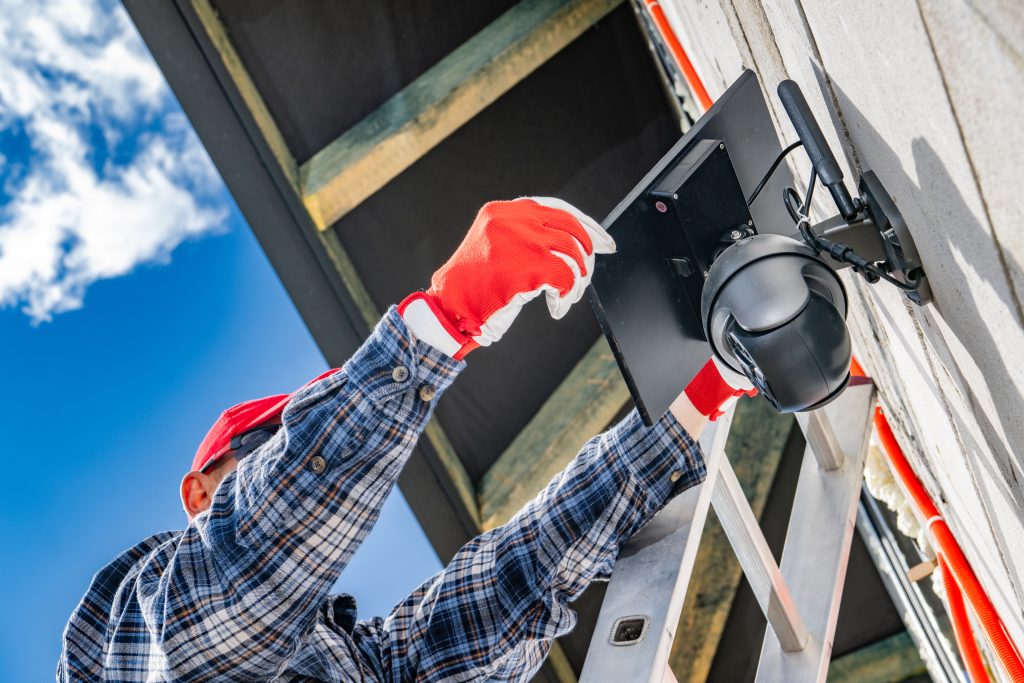
Let’s talk about the real-world Signs of CCTV cameras installed in the wrong place. If you want to actually maximize your investment and protect your staff, you need to understand exactly how to install CCTV in the right direction and avoid the classic pitfalls. Here are five glaring signs that your office setup needs a serious rethink, and how to fix those CCTV camera placement mistakes before it’s too late.
Sign 1: You’re Capturing More Sun Glare Than Faces
Dubai is sunny. We all know it. But if you point a sensitive camera lens directly at a massive glass entrance or an east-facing window without planning for the sunrise, your footage is going to be completely washed out. This is one of the most frustrating common CCTV installation mistakes out there. When considering how to choose a CCTV location, you have to track the natural light throughout the entire workday, not just when the installation technician happens to be standing there.
The Lighting and Glare Checklist:
- Check your video feeds during peak morning and late afternoon hours to identify any severe washouts.
- Identify any highly reflective surfaces (mirrors, glass conference tables, freshly polished marble floors) that bounce light straight into the lens.
- Ensure your cameras are equipped with Wide Dynamic Range (WDR) settings and that they are actually turned on to automatically balance extreme lighting contrasts.
If your feed looks like a glowing white blur for four hours a day, you haven’t mastered how to install CCTV in the right direction.
Sign 2: The Notorious “Top of the Head” Angle
A lot of business owners assume that higher is always better. They mount the cameras ten to twelve feet up in the air near the ceiling to keep them out of reach from potential vandals. While protecting the physical hardware makes sense in theory, placing them too high is one of those classic CCTV camera placement mistakes that completely ruins the actual video evidence. You end up with a fantastic top-down view of everyone’s bald spots and baseball caps, but absolutely zero facial recognition.
How to determine where to place security cameras for optimal identification? The sweet spot is usually around eight or nine feet off the ground, angled slightly downward. This prevents easy tampering while still capturing a clear, straight-on profile of anyone walking through the door. If you are struggling with how to choose a CCTV location for your main lobbies, always prioritize eye-level visibility over extreme height.
Sign 3: Hidden Corners and Unexpected Obstructions
Offices are living, breathing spaces. Furniture gets moved around, indoor plants grow surprisingly fast, and seasonal displays go up in retail zones. What was a clear, unobstructed view in January might be completely blocked by a giant promotional banner or a relocated filing cabinet in June. These physical obstructions create massive CCTV blind spots, rendering your expensive hardware virtually useless. When you notice these Signs of CCTV cameras installed in the wrong place, you have to act quickly to adjust the layout.
Leaving these gaps unaddressed directly leads to critical CCTV missed coverage. It is entirely possible to fix this by learning how to install CCTV in the right direction right from the start, which usually means setting up overlapping camera angles so one camera covers the blind spot of another.
Areas Most Prone to Hidden Obstructions:
- Tight, winding hallways where the field of view is naturally cut short by sharp corners.
- Warehouse shelving aisles where stacked inventory changes daily and can easily block the camera’s line of sight.
- Breakrooms or collaborative spaces where tall whiteboards and movable partitions are frequently relocated.
Failing to account for these dynamic spaces is one of the most common CCTV installation mistakes we regularly see during corporate security audits.
Sign 4: Ignoring the “Choke Points”
A “choke point” is any area where foot traffic is forced to funnel through a narrow space, such as main reception entrances, emergency stairwells, elevator banks, and turnstiles. How to determine where to place security cameras should always start with these exact zones. If your cameras are lazily pointed at the middle of a massive open room instead of focusing tightly on who is coming and going through the doors, you are making one of the biggest CCTV camera placement mistakes possible.
You want to capture high-definition faces at the exact moment someone enters your property. If an intruder makes it past the lobby unnoticed because of preventable CCTV missed coverage, tracking them across a wide-open sales floor is going to be an absolute nightmare. Properly mapping out your choke points is the ultimate secret to how to choose CCTV location effectively.
Sign 5: Your Camera Types Don’t Match Their Environment
Putting a standard indoor dome camera in a dusty, high-heat outdoor loading dock is a guaranteed recipe for failure. Similarly, putting a giant, heavily armored outdoor bullet camera inside a sleek, modern corporate boardroom just looks intimidating and highly unprofessional. Using the wrong hardware for the specific environment is heavily tied to common CCTV installation mistakes. It directly impacts your ability to figure out how to install CCTV in the right direction because the hardware simply won’t perform as expected when the elements hit.
If your outdoor lenses are constantly fogging up, or your indoor cameras can’t see anything when the office lights shut off at 8:00 PM, these are glaring CCTV camera placement mistakes.
Quick Audit for Hardware Matching:
- Verify that all exterior cameras carry an IP66 or IP67 weatherproof rating to survive the harsh UAE climate.
- Ensure indoor cameras have proper, functioning infrared (IR) capabilities if they are monitoring areas left in the dark after hours.
- Check that expensive PTZ (Pan-Tilt-Zoom) cameras are placed in wide-open areas where their 360-degree mobility can actually be utilized, rather than crammed into tight, restrictive corners.
Conclusion
If reading through this list made you realize your office is plagued by hidden CCTV blind spots, don’t panic. The good news is that these issues are highly correctable. Sometimes you just need to remount the camera a few feet to the left physically; other times, the internal hardware might be damaged from years of operating in the wrong environment.
If you are dealing with common CCTV issues in offices like blurry feeds, glare, or constant network dropouts, it might be time to bring in the experts for professional CCTV repair and maintenance. A certified, experienced technician can walk your floor plan, physically test the hardware limits, and provide a clear, honest CCTV repair vs replacement guide tailored strictly to your current setup. They know exactly how to optimize your existing gear to completely eliminate vulnerabilities.
Don’t wait for a major security breach to find out your cameras were pointing at a blank wall. By investing in top-tier CCTV surveillance solutions in Dubai, you can rest easy knowing your system is fully optimized, completely legally compliant, and perfectly positioned to protect your business day and night.