
If you run a business in Dubai, security is not something you can afford to figure out as you go. One break-in, one internal dispute caught on a blurry camera, one failed compliance check — and suddenly the cost of “sorting it out later” becomes very real.
This CCTV installation guide is built for business owners and office managers who want to get it right the first time. We cover the full picture — what to plan for, how the installation process actually works, what it costs, and what Dubai’s regulations require. Whether you are setting up a brand-new office or upgrading a system that has been running on decade-old cameras, this is your starting point.
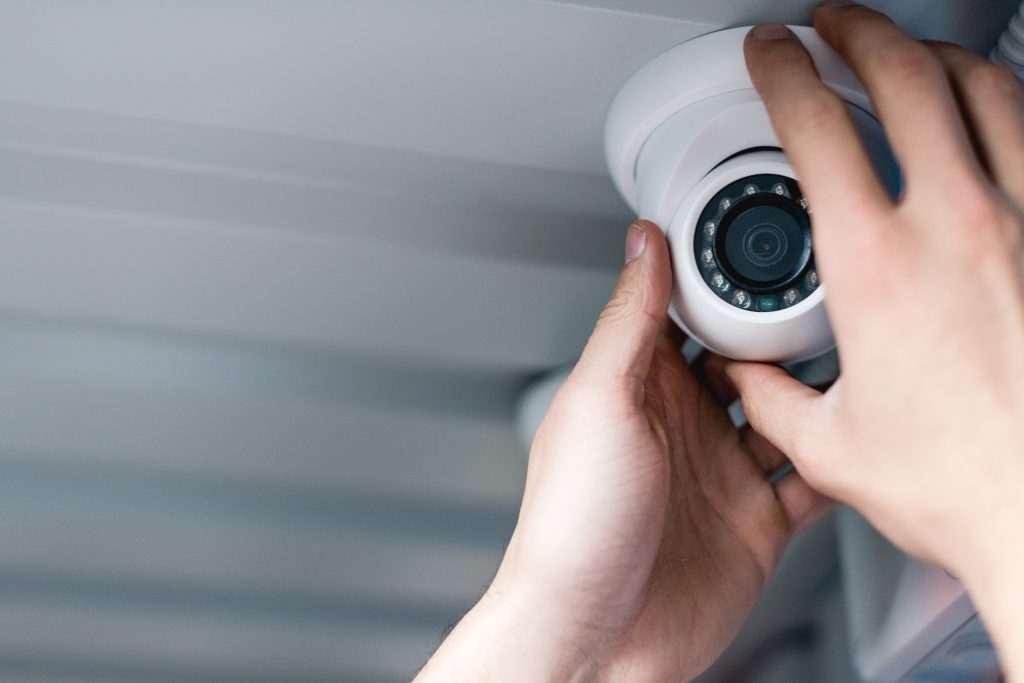
What Is a Business CCTV System, Really?
Most people know what a CCTV camera looks like. Fewer people understand CCTV installation guide and how the different parts of a system fit together — and why that matters when you are buying one for your office.
A business CCTV system is a network of cameras connected to a central recording device, with footage accessible only to authorized users. Unlike publicly broadcast footage, it stays within a closed loop. Nobody else sees it unless you give them access — or unless a legal authority requests it.
For offices in Dubai, the typical system includes some combination of:
- IP cameras: Connected over your network, high resolution, good for larger or multi-floor offices
- Dome cameras: Discreet, ceiling-mounted, work well in reception areas and open offices
- Bullet cameras: Visible, weatherproof, better for outdoor use or perimeter coverage
- PTZ cameras: Motorized, remotely controlled, good for wide open spaces like car parks
- Analog cameras: Older technology, still used in smaller setups, generally lower cost
The right combination depends on your layout, your budget, and what you actually need the system to do. A camera that looks impressive on a spec sheet might be completely wrong for your specific environment.
CCTV Installation for Offices in Dubai: How the Process Actually Works
There is a version of this where someone shows up, drills a few holes, mounts some cameras, and leaves you with a login and a prayer. That is not what good CCTV installation for offices in Dubai looks like.
A proper installation follows a clear sequence. Here is what that looks like in practice.
Site Survey
Before anything is purchased or installed, a qualified technician walks your office. They assess entry and exit points, lighting conditions, blind spots, existing network infrastructure, and any specific areas of concern. This is the most important step — and any installer who skips it is doing you a disservice.
System Design
Based on the survey, a layout is drafted. This shows where each camera goes, what it covers, how cables will be routed, and what recording equipment will be needed. Good design at this stage prevents expensive changes later.
Hardware Selection
Cameras, the DVR or NVR unit, storage drives, cables, and mounting hardware are chosen based on the design. This is where the spec-sheet decisions get made — resolution, storage capacity, night-vision capability, weatherproofing.
Cable Routing and Installation
Cables run through walls, ceilings, cable trays, or conduit depending on the building. In an older building with concrete walls, this stage takes considerably longer. It is not glamorous work, but it is where a lot of the quality difference between installers shows up.
Camera Mounting
Each camera goes up at the planned position and angle. Height, direction, and field of view are verified at this point — not after the cable has been cemented in.
DVR/NVR Configuration
The recording unit is set up — recording schedules, motion detection zones, storage retention settings, and remote access. This is also where footage retention is configured, which matters a great deal for CCTV installation for offices in Dubai and Dubai CCTV compliance requirements.
Testing and Handover
Every camera feed is checked. Motion detection is tested. Remote access is verified from outside the network. A proper walkthrough is done with the client before the installer leaves.
For a much more detailed breakdown of each stage, see our dedicated guide on the CCTV installation process for offices.
Typical Installation Timeline
| Office Size | Cameras | Estimated Time |
| Small office | Up to 10 | 1–2 days |
| Medium office | 10–30 | 3–5 days |
| Large / multi-floor | 30+ | 1–2 weeks |
These are rough guides for CCTV installation process.
Cabling complexity, building access restrictions, and whether existing infrastructure can be reused all affect the actual timeline.
CCTV Installation Cost in Dubai: What Are You Actually Paying For?
Cost is usually the first question, which is fair enough. But the number that matters is not the cheapest quote you receive. It is the total cost of a system or the CCTV installation steps that works reliably, meets compliance requirements, and does not need expensive remediation six months later.
The factors that drive CCTV installation cost for businesses in Dubai include:
- Number of cameras and their specifications
- Camera type — IP systems cost more than analog but offer significantly better performance
- Storage capacity and retention period
- Cabling complexity based on your building
- Whether remote access and smart features are required
- SIRA compliance documentation and certification
A small office CCTV setup Dubai with 6–8 basic cameras might come in around AED 3,000–6,000. A medium-sized office CCTV setup Dubai with 20 cameras and proper IP infrastructure can easily reach AED 15,000–25,000. Larger commercial setups go well beyond that.
Hidden costs are where businesses often get caught out — maintenance contracts, storage upgrades over time, licensing fees for advanced software, and compliance documentation charges. Budget for these upfront.
For a complete, transparent breakdown of what drives pricing, read our full guide on CCTV installation cost for businesses in Dubai.
Camera Placement Planning: Getting This Right Matters More Than the Cameras Themselves
You can have excellent cameras in the wrong positions and end up with footage that is completely useless. Camera placement planning is where a lot of office CCTV setups quietly fail.
Areas that should always be covered:
- All entry and exit doors — main, side, emergency
- Reception and lobby
- Server rooms and data storage areas
- Finance or cash-handling zones
- Stairwells and lifts
- Car parks and loading bays
- Open office floors (for general monitoring, not employee surveillance)
Placement principles that actually matter:
Avoid backlighting
A camera pointed at a door with a bright window behind it will produce silhouettes, not faces. This is one of the most common CCTV camera placement mistakes and fixes are either expensive or involve accepting poor-quality footage.
Mount at the right height
Standard mounting is 2.5–3.5 metres — high enough to avoid tampering, low enough to capture faces clearly.
Plan for lighting at night
A camera that performs well in daylight needs either low-light capability or supplemental lighting to be useful after hours.
Create some overlap
Adjacent cameras should have slight coverage overlap so there are no gaps between fields of view.
Common Problems That Show Up After Installation
Most businesses do not discover their CCTV has problems until something happens and they go to check the footage. At that point, the options are limited.
The issues that come up most often:
No signal / blank screens
Usually cable faults, power problems, or configuration issues. Preventable with proper installation and a thorough post-installation test.
Poor image quality
Cameras set to low resolution, dirty lenses, or simply the wrong camera for the environment.
Storage runs out
System set to continuous recording without sufficient storage capacity. Footage from a week ago gets overwritten. This is not a hardware issue — it is a planning issue.
Remote access does not work
Network configuration was not completed properly. Very common, very frustrating.
System lag during playback
NVR does not have sufficient processing power for the number of cameras installed.
Most of these are avoidable. Our post on common CCTV installation mistakes covers them in detail, including how to install CCTV system for business, how to identify them in an existing system.
Maintaining Your System After Installation
A CCTV system is not a one-time installation. It is ongoing infrastructure. The businesses that get the most out of their systems are the ones that treat maintenance seriously.
A basic maintenance schedule for offices:
- Clean camera lenses every 1–3 months
- Check all cable connections for wear or loosening
- Test every camera feed for clarity and correct coverage
- Verify storage is functioning and has adequate free space
- Update firmware and software when new versions are available
- Test remote access from both mobile and desktop at least monthly
- Review motion detection zones if office layout has changed
Many businesses in Dubai roll CCTV maintenance into a broader IT AMC (Annual Maintenance Contract). This is a sensible approach — it keeps CCTV maintenance and repair service consistent, professionally handled, and documented.
CCTV Compliance in Dubai: The SIRA Factor
Dubai CCTV regulations are not optional. SIRA — the Security Industry Regulatory Agency — sets the standards that business CCTV systems must meet. Non-compliance carries consequences that go well beyond a warning letter.
The core requirements most businesses need to understand:
- Cameras must cover all entry and exit points as a minimum
- Footage must be retained for at least 30 days
- Systems must be installed by SIRA-approved companies
- Equipment must meet technical specifications set by SIRA
- Compliance documentation must be produced and available
Operating outside these requirements can result in fines, trade licence complications, and insurance claim rejections. It is a more serious risk than most business owners realize until they experience the consequences directly.
For a detailed look at what happens when a system is not compliant — and how to check whether yours meets the standard, how to install CCTV system for business — read our guide on Dubai CCTV compliance requirements.
Choosing the Right CCTV Provider
The installer you choose determines a lot. Equipment quality matters, but so does placement design, configuration quality, documentation, and what happens after the installation is done. Choose the right CCTV camera type for your office
Things to look for:
- SIRA approval — verifiable, not just claimed
- Experience with commercial office installations specifically
- Transparent, itemized pricing
- Clear after-sales support terms
- Ability to produce compliance documentation
Our full guide on how to choose a CCTV installer in Dubai or how to install CCTV system for business walks through the complete evaluation process with a practical checklist.
Beyond Basic CCTV: Integration and Smart Security
Standalone CCTV is a good start. But offices that integrate cameras with access control systems get significantly more from their investment. When a door access event and a camera clip are linked automatically, you have a real audit trail — not just footage you have to manually match to a log.
CCTV access control integration also allows for automated alerts when unauthorized access occurs, single-platform management of both systems, and event-triggered recording that captures what matters without drowning in hours of irrelevant footage.
Our guide on CCTV camera placement mistakes and fixes and our post on integration both go deeper on these topics.
When to Upgrade
If your system is more than 5–7 years old, running on analog cameras, not SIRA compliant, or regularly producing footage that cannot identify individuals — it is time to have an honest conversation about whether repair or replacement makes more sense.
A good installer will give you a straight answer on this. The goal is a system that works, not a system that looks like it works.
Frequently Asked Questions
What is a CCTV system and why does my Dubai business need one?
It is a network of cameras and recording equipment that monitors and records activity around your premises. In Dubai, it serves both a practical security purpose and a regulatory one — most businesses are expected to operate SIRA-compliant systems.
How much does CCTV installation cost for a business in Dubai?
It depends heavily on the size of the office, the number of cameras, the type of system, and your compliance requirements. Small setups start from around AED 3,000; larger commercial systems can cost AED 20,000–60,000 or more. See our CCTV installation cost guide for a full breakdown.
How many cameras does my office need?
Every entry and exit point needs coverage as a minimum. After that, it depends on your office layout, the nature of your business, and any specific security concerns. A site survey by an experienced installer will give you an accurate number.
What are the most common problems with office CCTV systems?
No signal, poor image quality, storage running out, and remote access failures. Most are caused by poor installation or lack of maintenance — not hardware failure.
Is CCTV compliance mandatory for Dubai businesses?
Yes. SIRA sets the standards, and businesses are expected to meet them. The consequences of non-compliance — fines, licence issues, invalid insurance claims — are significant enough that compliance should never be treated as optional.
Ready to Set Up or Upgrade Your Office CCTV in Dubai?
Getting CCTV right takes more than buying cameras and mounting them on walls. It takes proper planning, the right installer, and an ongoing commitment to maintenance and compliance. Our team handles every part of this — site survey, system design, installation, SIRA compliance, and long-term support.
Get in touch today for a no-obligation assessment of your office’s security needs.